A research network became a wartime industry
Oak Ridge concentrated uranium enrichment, Hanford produced plutonium, and Los Alamos brought together weapons research and design. Chicago research helped establish what a controlled chain reaction could do. Workers at these sites often knew only one part of the project. British and Canadian collaboration added research and materials to the wider effort.
The record includes displaced communities, workers whose wartime labor sustained the project, and New Mexico residents exposed after Trinity. In Japan the consequences were borne in homes, schools, hospitals and workplaces. The city archives trace those lives alongside the U.S. government chronology.
Timeline, 1938–1947
Follow the discoveries, production decisions and political choices in order. The dates below use local dates at each site.
- 1938–1939
Fission is identified
Experiments by Otto Hahn and Fritz Strassmann produced evidence that uranium nuclei split. Lise Meitner and Otto Frisch supplied the physical interpretation and the term nuclear fission.
- August–October 1939
A warning reaches Roosevelt
Leo Szilard helped draft a letter signed by Albert Einstein warning of uranium’s potential wartime use. Roosevelt’s administration formed an advisory committee after receiving it.
- 1940–1941
British research changes estimates
The Frisch–Peierls memorandum and the British MAUD Committee argued that a weapon might be feasible on a wartime schedule. British and American work later became formally linked.
- 1942
The Army takes charge
The Army formed the Manhattan Engineer District. General Leslie Groves took charge that September and the program acquired sites for laboratories and large production plants.
- December 2, 1942
Chicago Pile-1
Enrico Fermi’s team achieved the first controlled, self-sustaining nuclear chain reaction beneath the stands at the University of Chicago.
- 1943
Los Alamos, Oak Ridge and Hanford
J. Robert Oppenheimer led the Los Alamos laboratory. Oak Ridge became the center of uranium enrichment. Hanford was developed to produce plutonium in reactors. The Quebec Agreement formalized U.S.–British cooperation.
- 1944
The plutonium design changes
Research on reactor-produced plutonium led Los Alamos to abandon its original gun-type option for plutonium and concentrate on implosion. Uranium and plutonium work continued on separate paths.
- Early 1945
Production reaches weapon development
The industrial plants supplied enriched uranium and plutonium to the project. The 509th Composite Group trained for the missions and deployed to Tinian.
- Spring–summer 1945
Target selection and political debate
Military and scientific committees discussed target selection and possible uses. The Franck Report proposed a demonstration before combat use, while other scientific advisers recommended direct use.
- July 16, 1945
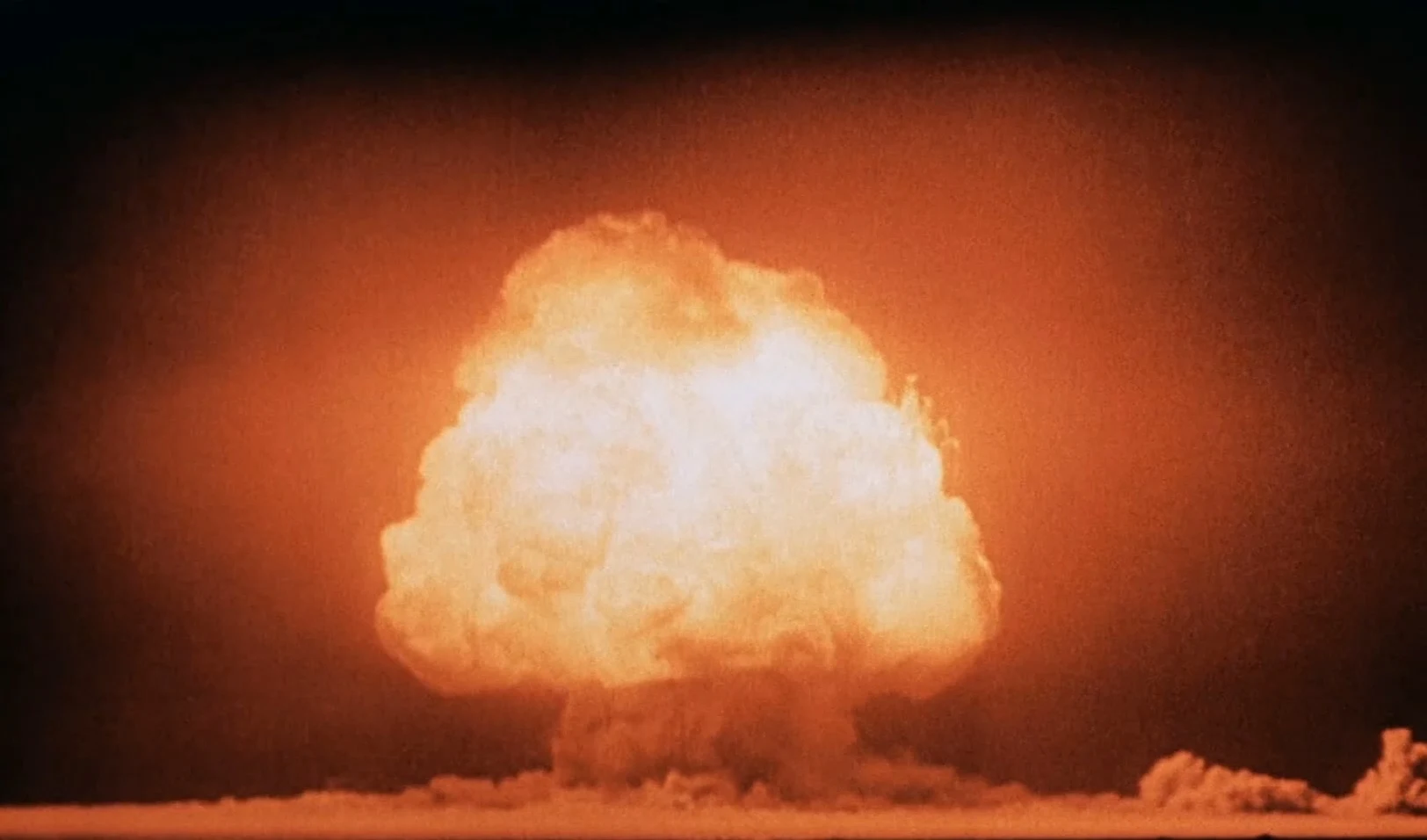
Trinity
A plutonium implosion device was tested in New Mexico. People living downwind were exposed to fallout. The test demonstrated the general approach later used in Fat Man.
- July 25–26, 1945
Military order and Potsdam Declaration
The U.S. operational order authorized atomic attacks when weather permitted after early August. The Allied Potsdam Declaration called for Japan’s surrender.
- August 6, 1945
Hiroshima
The United States used Little Boy over Hiroshima. The city estimates about 140,000 deaths by the end of the year.
- August 8–9, 1945
Soviet entry and the Nagasaki mission
The Soviet Union declared war on Japan on August 8. On August 9, the U.S. bomber assigned to Kokura diverted to Nagasaki and dropped Fat Man.
- August 15–September 2, 1945
Surrender
Japan announced its surrender on August 15. Representatives signed the instrument of surrender on September 2.
- 1946–1947
Civilian control begins
The 1946 Atomic Energy Act created the Atomic Energy Commission, which took over the Manhattan Project’s functions at the start of 1947.

Research, production and accountability
Oak Ridge and Hanford
The project pursued several approaches to uranium enrichment at Oak Ridge rather than depending on a single unproven process. Hanford’s reactors took a different route, producing plutonium that could be separated from irradiated material. The two plants’ outputs shaped which designs Los Alamos could put into service in 1945.
Los Alamos and Trinity
Los Alamos coordinated research from across the project. Trinity was the transition from laboratory work to a full-scale nuclear detonation. Nearby New Mexico communities received no advance warning. At Hanford, the project uprooted farming communities and displaced Indigenous peoples from places they had long used.
Follow the two weapons
The Science of Little Boy · The Science of Fat Man